When Local Dental Labs Get Local Press, It's Time to Localize Your Marketing Too
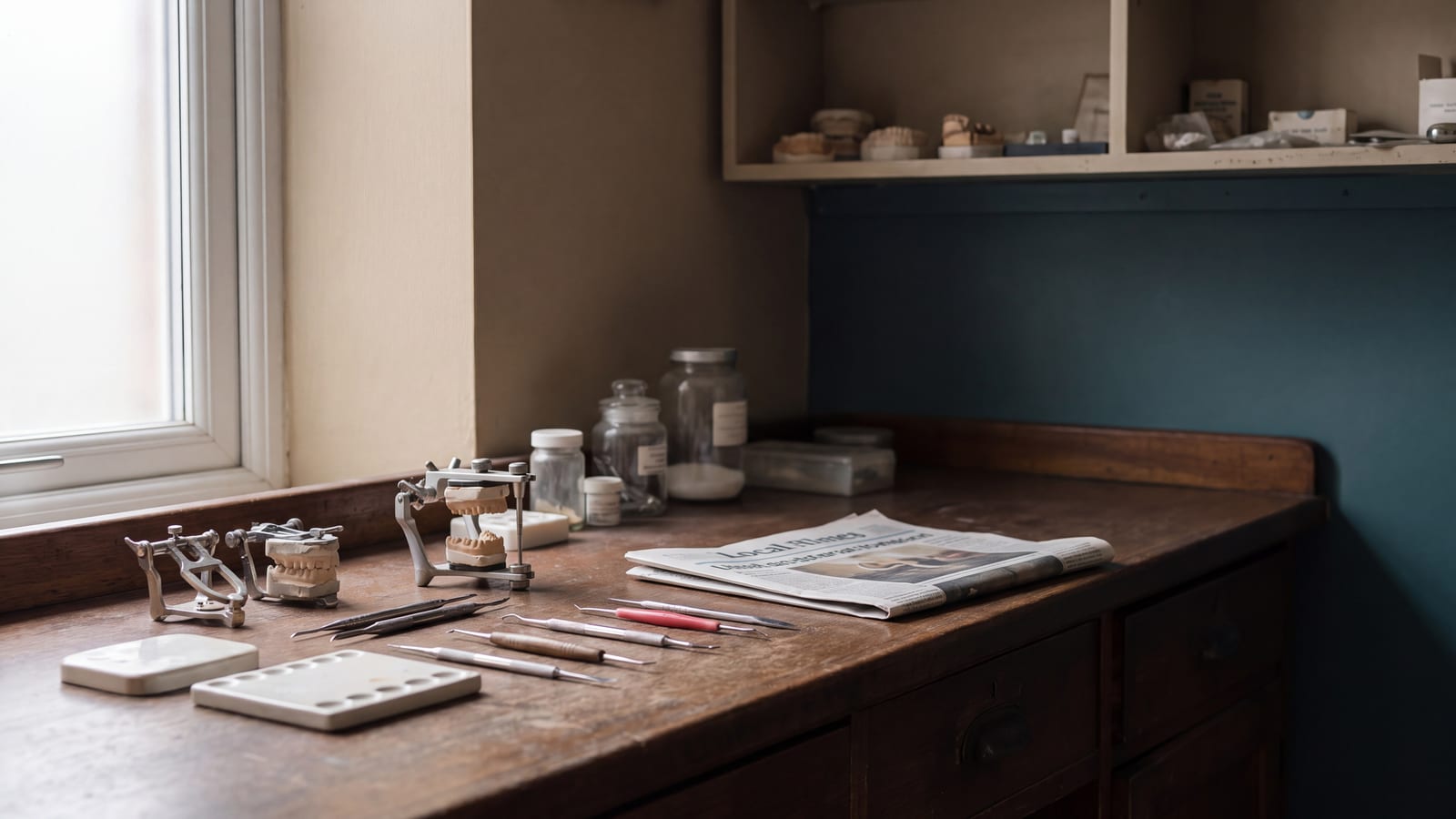
A hometown newspaper writes up a local dental lab owner, and it's a reminder of something bigger: independent labs still run on local reputation, even as the industry consolidates around them. If you own a lab, the lesson isn't about the article itself. It's about making sure your name shows up in your own market as often as it can.
Local coverage like this happens because a lab owner has been part of a community for years, sometimes decades. That kind of visibility used to be enough on its own. A dentist down the street knew the lab owner, maybe played golf with them, maybe just drove past the building every day. Referrals happened through proximity and familiarity.
That world is shrinking. Larger groups are acquiring labs, building specialty divisions, and opening white-label manufacturing to partner labs and clinics across regions, based on recent industry announcements. None of that is good or bad on its own. But it does mean independent and family-owned labs are competing against organizations with more scale, more capital, and often more marketing infrastructure.
Local reputation still matters, but it needs a channel
The good news for smaller labs is that dentists still prefer working with a lab that feels local and responsive. Trade coverage from groups like NADL and LMT consistently points to relationships and turnaround reliability as reasons dentists stick with a lab, or switch. That has not changed even as ownership structures shift.
What has changed is how dentists find out a local lab exists in the first place, especially newer dentists opening their first practice or associates about to buy in. They are not reading the local paper. They are scrolling Instagram and Facebook, checking reviews, and looking at what shows up when a lab's name comes up in conversation.
This is where a local news mention, a well-run Meta ad campaign, and a simple website all work together instead of competing. A story in a local outlet builds credibility. A Meta ad puts your lab in front of dentists in your service area who have never heard of you. The combination is stronger than either alone.
Why Meta ads fit a local lab's budget and goal
Most labs are not trying to reach dentists nationally. They are trying to reach a few hundred practices within a reasonable driving or shipping radius. That is a narrow, local targeting problem, and it is exactly what Meta's advertising platform is built for. You can set a geographic radius around your lab, target by job role and interests, and run creative that speaks directly to dentists rather than the general public.
Search advertising through Google Ads works differently. It captures dentists who are already typing something like "dental lab near me," which is a smaller and more sporadic pool than the number of dentists who would recognize your lab's name and switch if given the right nudge at the right time. Meta lets you be that nudge, showing up in a dentist's feed before they've started actively searching.
That figure comes from published benchmark data on dental lab lead costs, and it is directional, not a promise for every lab. But it gives owners a real number to plan around instead of guessing. If a single new dentist account is worth a meaningful chunk of monthly revenue over time, spending in that range to generate qualified leads is a reasonable trade, not a gamble.
Consolidation raises the stakes on visibility
As larger groups acquire labs and build out specialty divisions for things like all-on-X or high-end esthetics, they typically bring marketing teams and ad budgets with them. That does not mean independent labs need to match that spend dollar for dollar. It means they can no longer rely on word of mouth alone to hold their share of the local market.
A lab that has been quietly good for twenty years is still vulnerable to a dentist simply not knowing who else is out there, or forgetting the lab exists when they're frustrated with a turnaround delay. Consistent, low-key local advertising keeps a lab top of mind without requiring a large team or a big rebrand.
A practical starting point
Labs that are new to paid advertising do not need a complicated funnel. A simple Meta campaign built around a clear offer, a case acceptance guide, a free trial case, a straightforward look at the lab's work, run to dentists and practice managers within a set radius, is enough to start generating leads. Ad content needs to follow Meta's advertising standards, which is mostly common sense: honest claims, no misleading before-and-afters, clear identification of the business running the ad.
For labs that want a broader view of channel options before committing budget, our earlier piece on where a dental lab should advertise lays out the tradeoffs between Meta, Google, and other channels in more detail. For labs that would rather hand the campaign setup to someone who works specifically with dental labs, a lab-focused ad service like dentallabs.buzz can get a first campaign running without a lot of trial and error.
Local reputation got a lot of labs to where they are today. It just is not sufficient by itself anymore. Pairing it with steady, targeted local advertising is how independent labs keep winning new dentist accounts while the industry around them keeps consolidating.