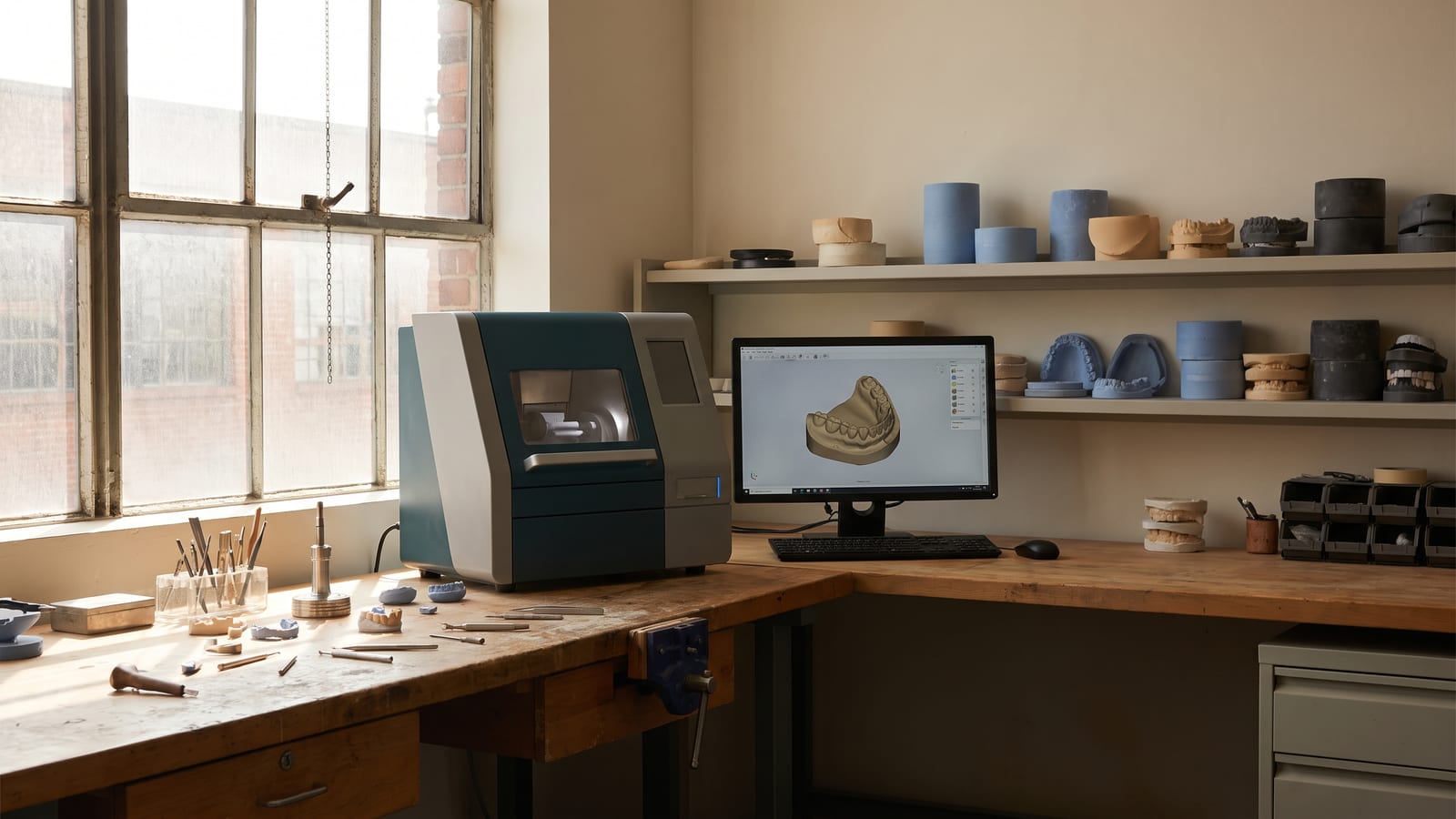
AI Is Changing How Dental Labs Make Ads. Here's the Honest Version

AI lets a lab produce many ad variations cheaply, so you get more at-bats and find a winning ad faster. It does not change the fundamentals: a clear offer, honest claims, and fast follow-up still decide your results. Meta allows AI-made ads as long as they follow its advertising standards.
What AI actually changes
The cost of trying a new idea has dropped hard. A lab used to need a photo shoot for one ad. Now it can put out a dozen fresh angles for a fraction of that. More angles tested means a winner shows up sooner, which is the whole point of running more ads rather than betting on one.
What it does not change
The ad still has to say something true and clear, aimed at the right dentists, with one obvious next step. And a lead still has to be answered fast. AI makes the creative cheaper, not the follow-up optional.
Meta's rules on AI ads
According to Meta's advertising standards, ads must be honest and must not mislead, whether a human or a tool made them. Keep claims plain and provable and you are fine. We cover the wider shifts in 2026 marketing trends.
The quality bar
Avoid the obvious fake-AI look. Clean, real-feeling creative that leads with your offer beats a glossy image that hides the message. When in doubt, make it look like a lab, not a stock render.
Frequently asked questions
Are AI-made ads allowed on Meta?
Yes, as long as the ad is honest and follows Meta's advertising standards. The upside is volume: you can test far more angles, which is how you find a winner faster.
Do AI ads perform worse than real photos?
Not by default. A clear message decides performance more than how the image was made. A clean AI image with a strong offer can beat a pretty photo with a weak one.